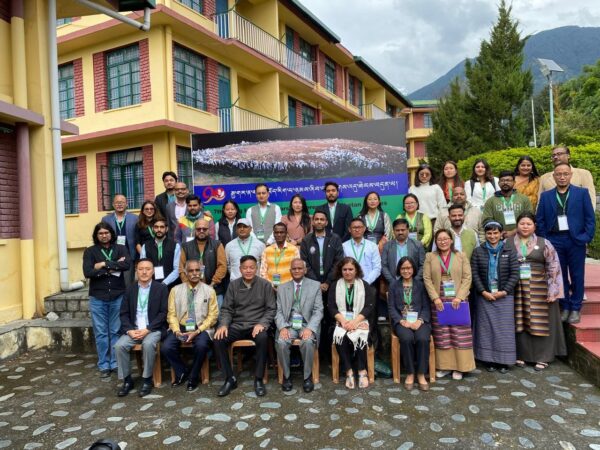
7th Young Indian Scholars’ Conference on Tibetan Studies held in Dharamshala
– By ATWS Staff Editor
Reference :
7th Young Indian Scholars’ Conference on Tibetan Studies Commences in Dharamshala
ATWS Dharamshala, October 9, 2025: Tibet Policy Institute (TPI) under the Department of Information and International Relations (DIIR), Central Tibetan Administration (CTA) organized the 7th Young Indian Scholar’s Conference on Tibetan Studies at the Administration Training and Welfare Society, Dharamshala. ATWS facilitated the event with venue and service facilities.
The 2-Day Conference from October 8th to 9th, 2025 was aimed to provide a platform for the emerging voices to nurture original ideas and to strengthen academic networks, build up a good relation between young Indian and Tibetan Scholars pertaining to Tibetan Studies.
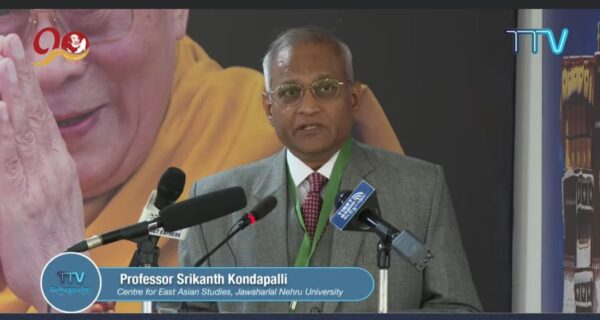
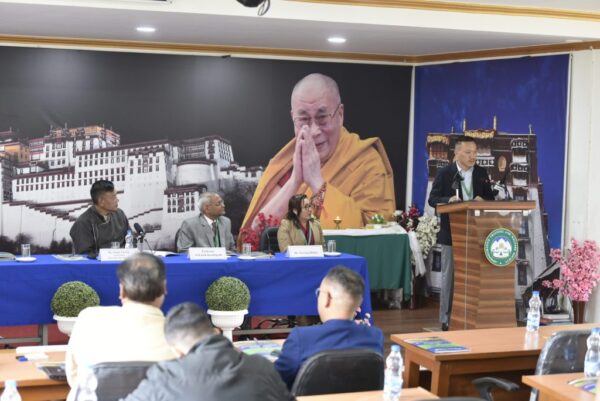
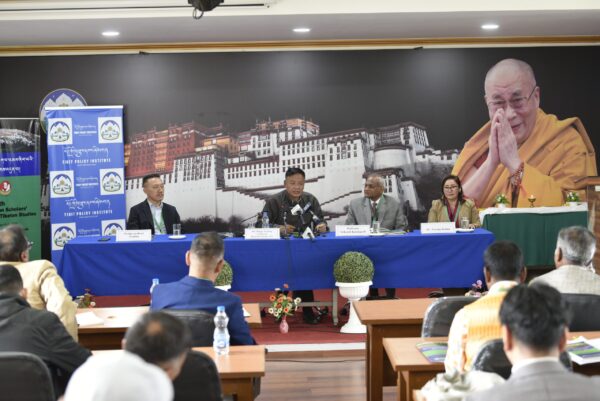
The Opening Ceremony held on 8th October morning in Thumi Hall of ATWS was graced by Honorable Sikyong Mr. Penpa Tsering la as the chief guest along with Professional Srikanth Kondapalli of Centre for East Asian Studies, Jawaharlal Nehru University, India.
The Opening session was moderated by Dr. Tsering Dolma la, the conference coordinator, followed by welcome remarks by Mr. Tempa Gyaltsen Zamlha la, Deputy Director of the Tibet Policy Institute (TPI). He extended a warm welcome to the Chief Guest and all participants, explaining that during the two-day conference, scholars would present papers on Tibet’s history, culture, environment, geopolitics, and India–Tibet relations. He noted that the conference serves as a platform for young scholars in India to exchange ideas and engage in academic discussions on Tibetan studies.
In the Inaugural address, Honorable Sikyong Penpa Tsering la, commended the TPI for organizing the conference and fostering intellectual exchange and deepening understanding of Tibet’s historical, cultural, and geopolitical significance. He stressed that academic research plays a crucial role in countering distorted narratives about Tibet and preserving the truth of its history.
Further, he stated how the CTA’s 16th Kashag aimed to reaffirm the CTA’s renewed strategic focus on reinforcing Tibet’s historical status as an independent nation, explaining that the approach aims to strengthen the legitimacy and moral foundation of the Middle Way Policy proposed by His Holiness the 14th Dalai Lama. He said, “When His Holiness the Dalai Lama speaks of the Middle Way, it is a call for a peaceful resolution — one that neither seeks separation nor accepts the current repression,” Sikyong remarked. “However, in the face of Beijing’s continued denial and lack of response, we must reinforce the legitimacy of our position by seeking international recognition of Tibet’s past independence.”
Speaking about the Resolve Tibet Act passed by the United States Congress and signed into law by former President Joe Biden, Sikyong underscored that the legislation rejects China’s false claim that Tibet has been part of China since ancient times. He reiterated that His Holiness the Dalai Lama has never accepted such a narrative, and that the U.S. government likewise does not recognize it. The Act, he explained, also urges cooperation with like-minded nations to counter China’s disinformation on Tibetan history, and clearly defines Tibet’s territorial space to include all three traditional provinces—U-Tsang, Kham, and Amdo. He acknowledged the extensive effort involved in getting the bill passed through both the House and the Senate.
Sikyong also drew attention to the parallel between Tibet and Ukraine, observing that what the world is witnessing in Ukraine today is similar to what happened to Tibet more than seven decades ago. “Tibet was invaded, occupied, and forced to sign the 17-Point Agreement under duress in 1951 — a clear violation of international law,” he said.
In conclusion, Sikyong Penpa Tsering urged young scholars to deepen their research on Tibetan religion, culture, and history, emphasizing that their academic contributions can help present factual evidence to the international community about Tibet’s historical independence. He called upon the global community to support the Middle Way Approach and stand in solidarity with the Tibetan people in their peaceful struggle for genuine autonomy and the preservation of their identity.
Following that, Professor Srikanth Kondapalli from Jawaharlal Nehru University addressed the gathering, highlighting the broader geopolitical and academic challenges affecting Tibet, specifically, China’s growing influence over trade, investments and also the disruptions in Tibetan Studies research works. He urged the scholars and institutions, including the Tibet Policy Institute community, to remain vigilant, adaptable, and proactive in global outreach to ensure Tibet’s narrative receives wider recognition.
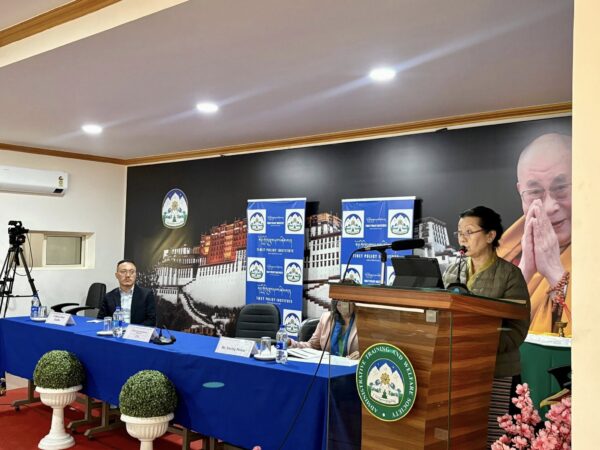
The conference concluded with an equally grand closing ceremony, presided over by Chief Guest Mrs. Dolma Tsering Teykhang, Deputy Speaker of the Tibetan Parliament in exile. Emphasizing the crucial role of academic research, truth-telling, and global solidarity in preserving Tibet’s identity and advocating for justice, she urged the scholars not only to pursue rigorous research but also to have “the courage to stand by what they have found.”
She described the human right situation as “grave”. “Inside Tibet, human dignity is under siege. Faith is criminalized. Truth is censored. And injustice wears the mask of development,” said the Deputy Speaker in a nutshell. Concluding her address, she appealed to the audience: “By supporting Tibet, you are not only helping Tibetans but also safeguarding your own heritage and future.”
Over the two day’s conference, nine panel discussions were held. The themes are; Panel 1-Foreign Policy, Diplomacy & Geopolitics, Panel 2- Trade, Routes & Socio-Cultural Exchanges, and Panel 3- Demography and Population Change, Panel 4- Medicine, Well-being & Traditional Knowledge, Panel 5- Media, Representation & Identity, Panel 6- Religion, Symbolism & Cultural Heritage, Panel 7- Identity, Memory & Exile, Panel 8- Environment, Resources & Strategic Futures and Panel 9 Special Session- Expert Panel.
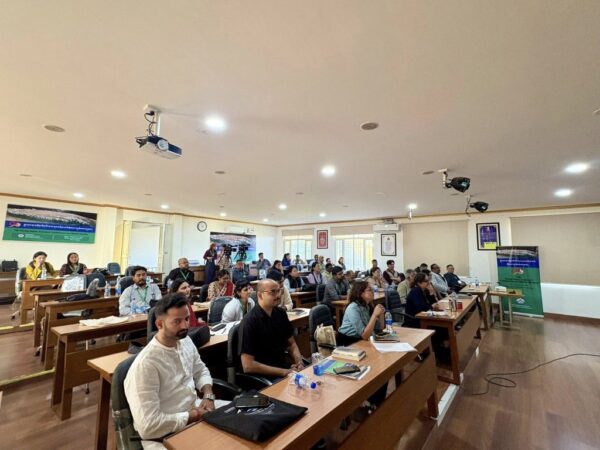
Altogether the conference was attended by thirty attendees, including four Experts (2 Males and 2 Females), three Co- Authors (2 Males and 1 Female) and twenty three participants (15 Males and 8 Females).